It depends on where your business is. If you’re brand new, testing an idea, or a one-person operation with a single touchpoint, a well-made logo may be all you need for now. If customers meet you in more than a couple of places, a website, packaging, social media, print, you’ll feel the limits of a logo-only brand quickly, and a full identity starts earning its keep.
Let’s define the terms, because they get muddled constantly.
Plain definitions, no jargon
A logo is a mark. It’s the symbol or wordmark that identifies your business, the thing that goes on your sign, your invoice, your website header.
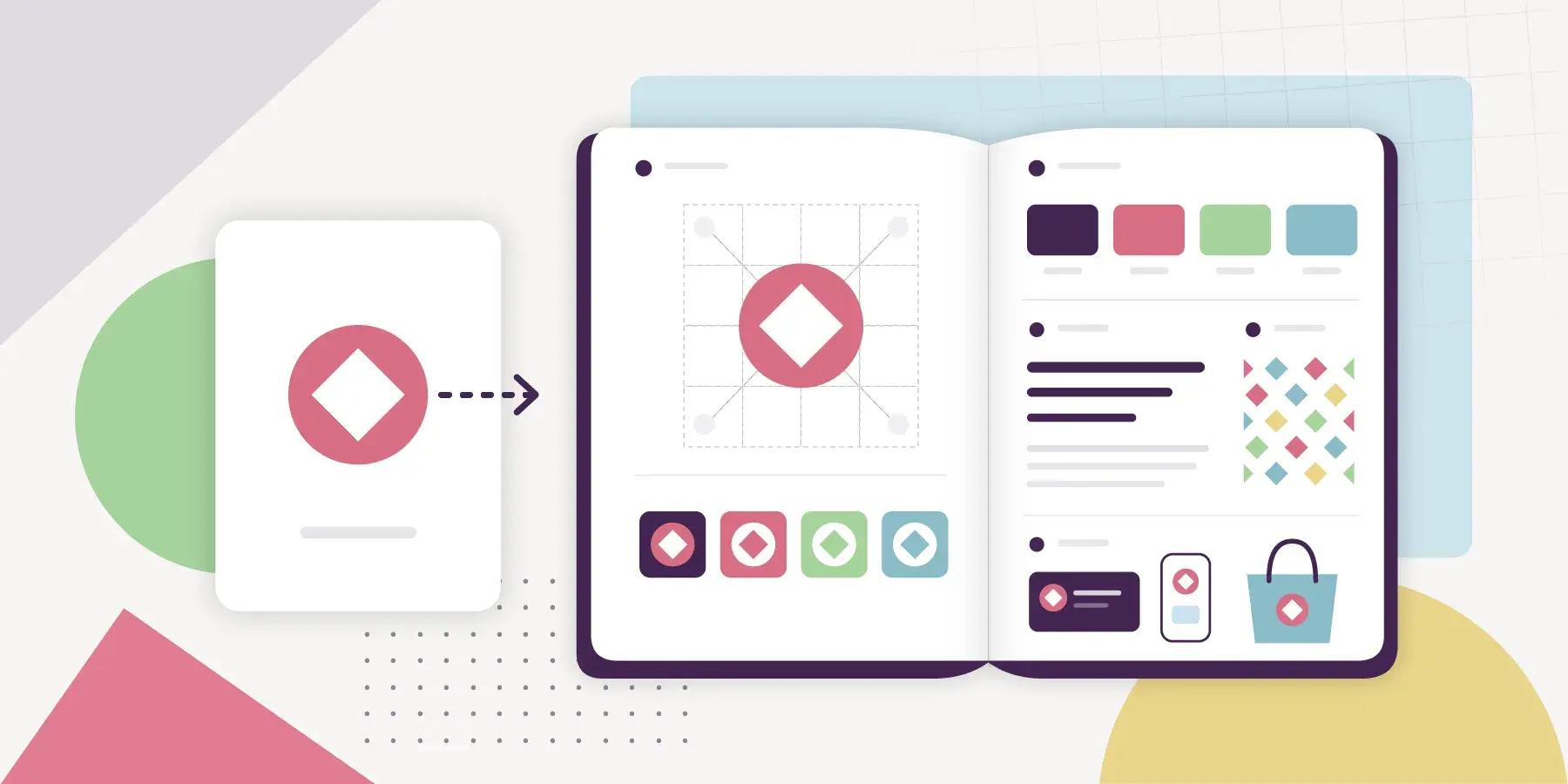
A brand identity is the whole visual system around that mark: the colours you always use, the fonts you always use, and the rules for how it all fits together. The logo is one instrument. The identity is the band.
(There’s also a brand, which is bigger still: your reputation, what people say about you when you’re not in the room. You can’t buy that one directly, but a strong identity helps you earn it.)
When a logo alone is enough
No shame in starting small. A logo on its own can carry you when:
- You’re launching and need something credible fast
- Your budget has one line for design, and it’s a short line
- You have very few touchpoints, maybe a sign and an invoice
- You’re testing a business idea and aren’t sure it’ll stick
- You’re a solo operator whose work is mostly word of mouth
In these cases, spend your budget on one good logo instead of a full system you won’t use yet. A strong mark, designed with growth in mind, can anchor a full identity later without starting over.
What a full brand identity includes
A proper identity package typically covers:
- Logo development. Usually a primary logo plus variations: horizontal, stacked, icon-only, one-colour versions for when full colour won’t work.
- Colour palette. Your primary and secondary colours, with exact values for print (CMYK, Pantone) and screen (RGB, hex), so your blue is the same blue everywhere.
- Typography. Chosen fonts for headings and body text, with rules for how to use them.
- Patterns and textures. Supporting visual elements that add personality and depth to the brand, and give you more ways to create distinctive layouts and applications.
- Icons and other secondary graphics. A set of supporting graphic elements that extend the identity beyond the logo and help create a consistent visual language.
- Brand guidelines. The document that ties it together: logo spacing, what not to do, colour codes, type sizes. It’s what keeps your brand consistent when different people (or printers, or web developers) touch it.
- Applications. The identity applied to real things: business cards, letterhead, social templates, signage, whatever your business actually uses.
What’s the difference in cost and effort?
A standalone logo is a smaller project: a discovery conversation, concept development, refinement, final files. A full identity involves everything the logo does, plus colour and type exploration, guideline writing, and application design. Expect it to take several times the hours, because it is several times the thinking. Prices vary widely across Canada, but the honest rule of thumb is that an identity costs a multiple of a logo, not a little more.
The payoff is that every future design decision gets faster and cheaper. With guidelines in hand, any designer, printer, or marketer can produce on-brand work without guessing, and without you art-directing every postcard.
Signs you’ve outgrown a logo-only brand
Run through this checklist. Two or more checkmarks and it’s time to think about a full identity:
- Your materials use different colours or fonts depending on who made them
- You hesitate before sending files to a printer because you’re not sure what’s “correct”
- New marketing pieces get designed from scratch every time
- Your website, social media, and print don’t look like they’re from the same company
- You’re hiring staff or contractors who need to produce branded materials
- You’re entering a market where competitors look more polished
- You’ve started avoiding your own materials because they feel inconsistent
That inconsistency isn’t just an aesthetic problem. Customers read it, often unconsciously, as a signal about how you run everything else.
How we approach this at Eggbeater
A successful brand identity expresses your core values, personality and market position. This helps you connect with your audience and allows you to deliver your messaging more effectively and become more profitable as a business.
We build branding packages that include logo development, colour palette, typography, and brand guidelines, so what you get is a system, not just a mark. It starts with the Discover phase of our 4D workflow: we learn your business, your customers, and where your brand needs to show up before we design anything. And if a logo is truly all you need right now, we’ll tell you that, and design it so a full identity can grow around it later.
Not sure which side of the line you’re on? Send us a note about your business and where it’s headed, or fill out our quote request form. It’s a quick conversation, and we can whip up an estimate for either path so you can decide with real numbers.
Still Have Questions?
Can I build a brand identity around an existing logo?
Yes. If your existing logo is working well, there’s no need to throw it away just because you’re ready for a fuller identity. We can build a colour palette, typography, guidelines, and other visual elements around an established mark. If the logo itself is holding the brand back, we can address that too.
Do I need brand guidelines if I’m the only person using my brand?
They can still be useful. Even if you’re doing all the design yourself, guidelines give you a reference to return to when you’re creating something new months – or years – later. They’re particularly helpful if you eventually bring in a designer, printer, marketer, or other contractor.
What if I don’t know what my business will look like in a few years?
That’s okay. Your identity doesn’t have to predict the future perfectly. A good identity should give you enough structure to be consistent now while leaving room for the business to grow and change.
Can I use a logo I made myself?
You certainly can. The question is whether it’s going to serve your business as it grows. A DIY logo might be perfectly appropriate while you’re testing an idea, but if you’re investing in a website, packaging, signage, advertising, or other customer-facing materials, it’s worth considering whether the logo and broader identity are communicating what you want them to.
When should I invest in a professional brand identity?
There’s no magic revenue number or business age that determines when you’re ready. A good time is when your business has enough customer touchpoints that consistency matters – or when you’re spending increasing amounts of time making individual design decisions that a clear identity could make easier.